 BLEND ANALYTICS · 8 MIN READ
Multi-Peptide Blend QC: Identity, Component Assay and Impurity Testing Before Bulk Purchase
How B2B buyers can define identities, component quantities, separation, impurity limits and lot records for a multi-peptide research blend.
Read expert guide ↗ VIAL PACKAGING · 8 MIN READ
Lyophilized Peptide Vial Packaging: Closure, Moisture and Label Checks for B2B Orders
A practical packaging checklist for lyophilized peptide research vials covering container and closure choices, moisture evidence, label reconciliation and shipment conditions.
Read expert guide ↗ SCALE-UP & QUALITY · 9 MIN READ
Peptide Scale-Up and Change Control: What to Agree Before a Repeat Bulk Order
A B2B guide to pilot-to-bulk peptide comparability, change notification, quality-agreement responsibilities and the evidence behind a repeat order.
Read expert guide ↗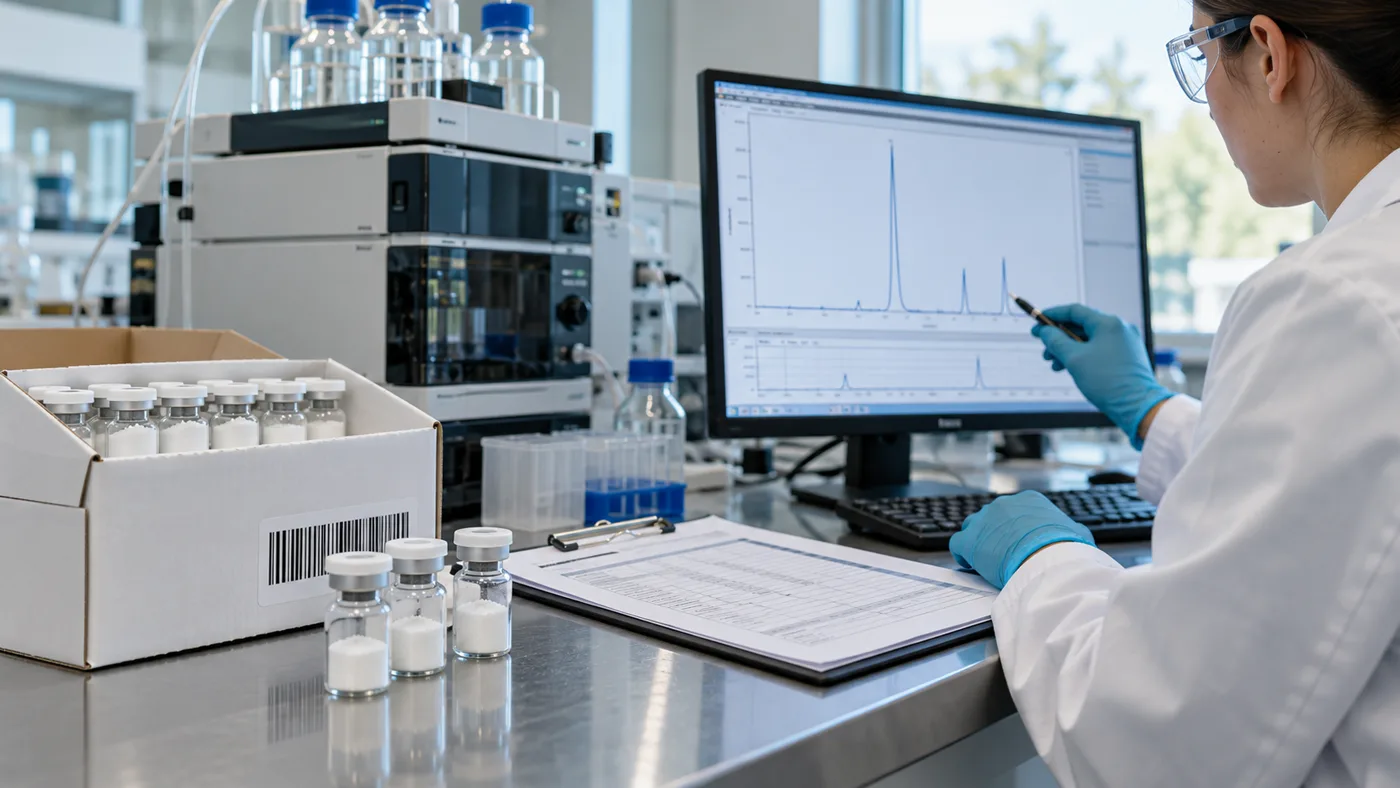 BATCH TRACEABILITY · 8 MIN READ
Peptide Batch Traceability: How to Link a COA, Vial Label and Export Shipment
A practical B2B checklist for matching peptide batch numbers, COA results, vial labels, packing records and shipment evidence before accepting a supply lot.
Read expert guide ↗ PEPTIDE ANALYTICS · 8 MIN READ
Peptide Counterions Explained: TFA, Acetate and Chloride in a B2B Specification
Why a peptide sequence alone does not define the supplied salt, how TFA, acetate and chloride affect comparison, and what evidence a buyer should request.
Read expert guide ↗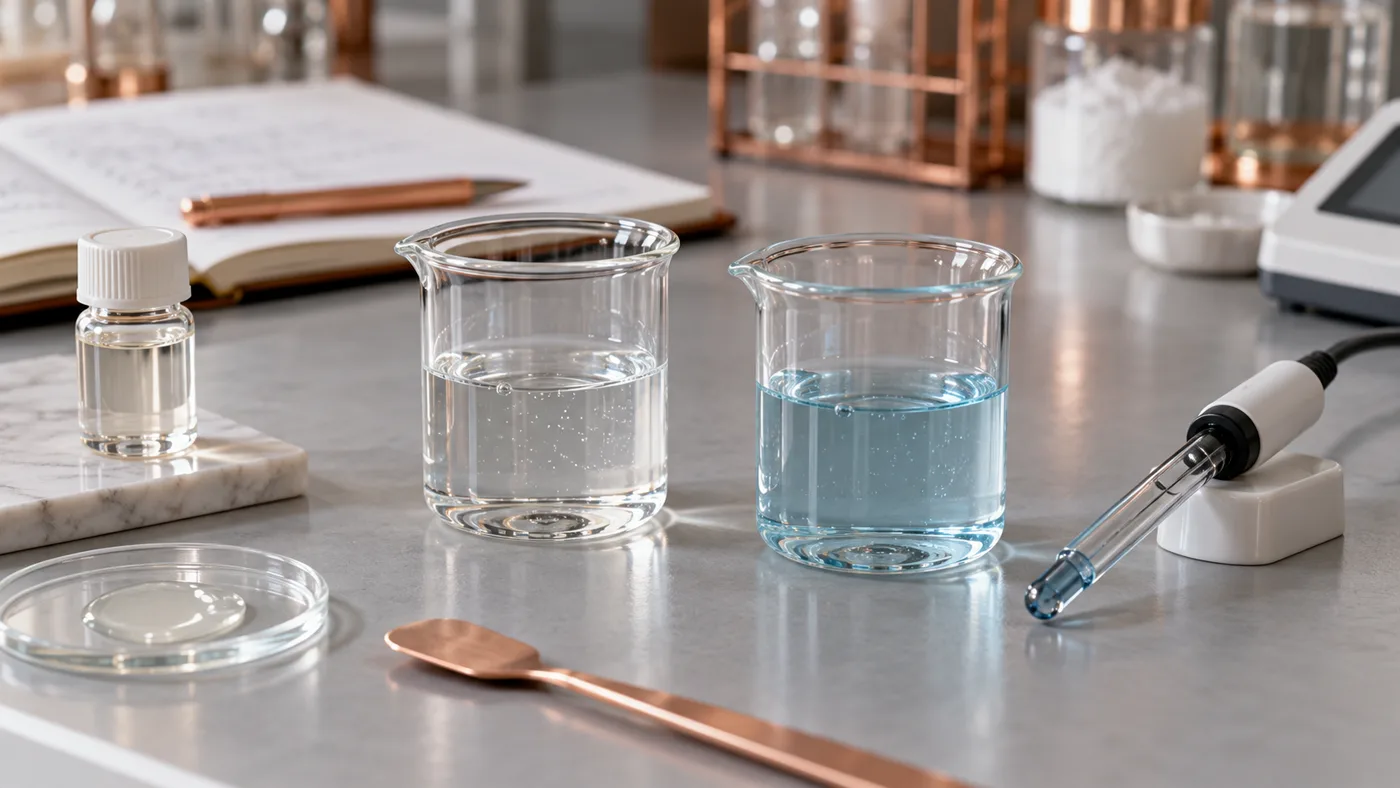 COSMETIC FORMULATION · 9 MIN READ
Cosmetic Peptide Formulation Compatibility: A Screening Plan for B2B Development
How qualified cosmetic teams compare peptide raw materials in a real formula: identity, active basis, pH, packaging, stability and microbiological evidence.
Read expert guide ↗COSMETIC PEPTIDES · 13 MIN READCosmetic Peptide Raw Materials: INCI, Purity, Solubility, Stability and Supplier Checklist
A B2B guide to sourcing cosmetic peptide raw materials by INCI identity, active content, COA evidence, solubility, formulation stability and OEM/ODM readiness.
Read expert guide ↗BULK WHOLESALE · 13 MIN READBulk Lyophilized Peptide Powder Wholesale: MOQ, COA, Packaging and Global Shipping Guide
A procurement guide to bulk lyophilized peptide powder, covering MOQ, price comparisons, lot-specific COAs, packaging, inventory planning and international shipping.
Read expert guide ↗SUPPLIER QUALIFICATION · 14 MIN READHow to Choose a Peptide Manufacturer in China: A B2B Buyer's Quality, COA, MOQ and Export Checklist
A practical B2B checklist for qualifying a peptide manufacturer in China across synthesis capability, COA evidence, MOQ, scale-up, packaging and export support.
Read expert guide ↗SPECIFICATION · 9 MIN READPeptide Purity Guide: How to Choose 95%, 98% or 99%+ for Research
A practical guide to peptide purity grades, HPLC area percentage, peptide content and the questions buyers should answer before specifying 95%, 98% or 99%+ purity.
Read expert guide ↗QUALITY CONTROL · 10 MIN READHow to Read a Peptide COA: HPLC Purity, Mass Spectrometry and Peptide Content
An expert checklist for evaluating a peptide certificate of analysis, including lot identity, HPLC purity, mass spectrometry, content, counter-ion and storage information.
Read expert guide ↗CUSTOM SYNTHESIS · 11 MIN READCustom Peptide Synthesis Cost and Lead Time: A Technical Buyer's Guide
Understand the variables that drive custom peptide synthesis price and lead time, from sequence difficulty and modifications to purity, scale, analytics and documentation.
Read expert guide ↗HANDLING · 9 MIN READLyophilized Peptide Storage and Shipping: Temperature, Moisture and Handling
A research-focused guide to lyophilized peptide storage, cold-chain decisions, moisture control, light protection, shipping review and receipt documentation.
Read expert guide ↗GLP-1 RESEARCH · 12 MIN READSemaglutide vs Tirzepatide vs Retatrutide: A Research Peptide Comparison
A non-clinical comparison of semaglutide, tirzepatide and retatrutide covering receptor profile, molecular design, analytical challenges and research procurement specifications.
Read expert guide ↗COSMETIC RESEARCH · 10 MIN READGHK-Cu Peptide Guide: Structure, Quality Testing and Cosmetic Research
An expert GHK-Cu peptide guide covering copper-complex identity, quality specifications, analytical testing, stability and responsible cosmetic research planning.
Read expert guide ↗